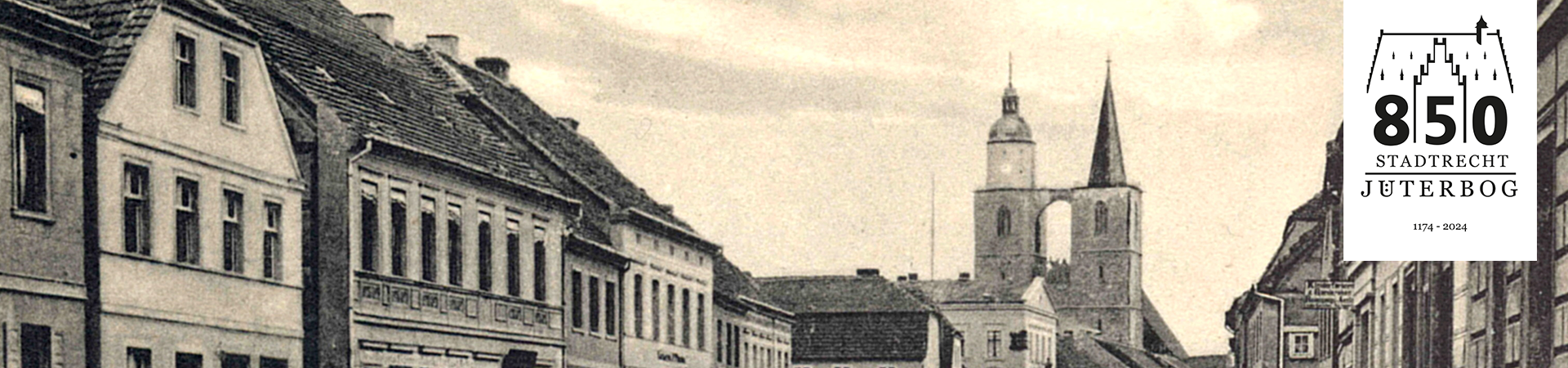
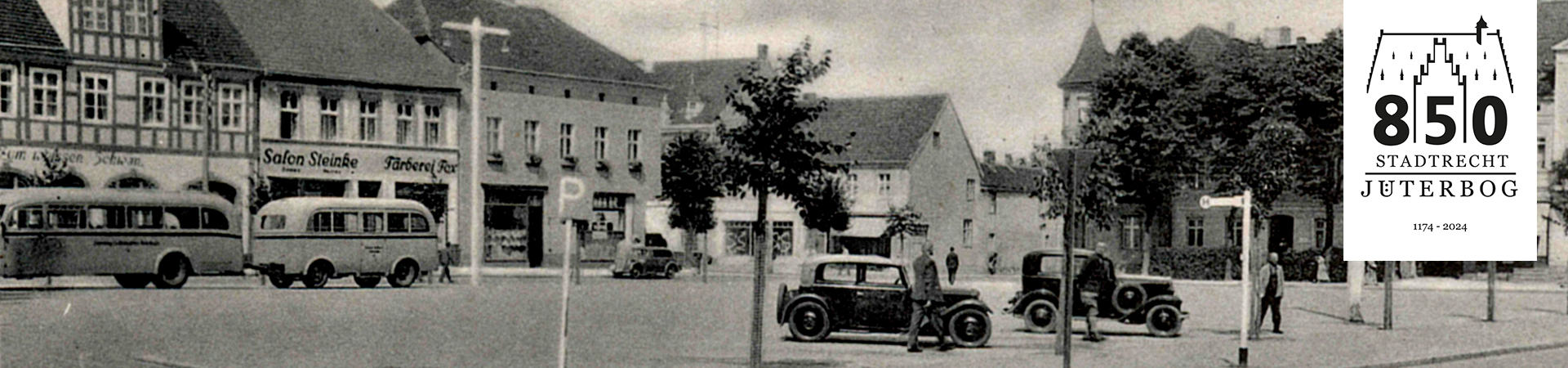
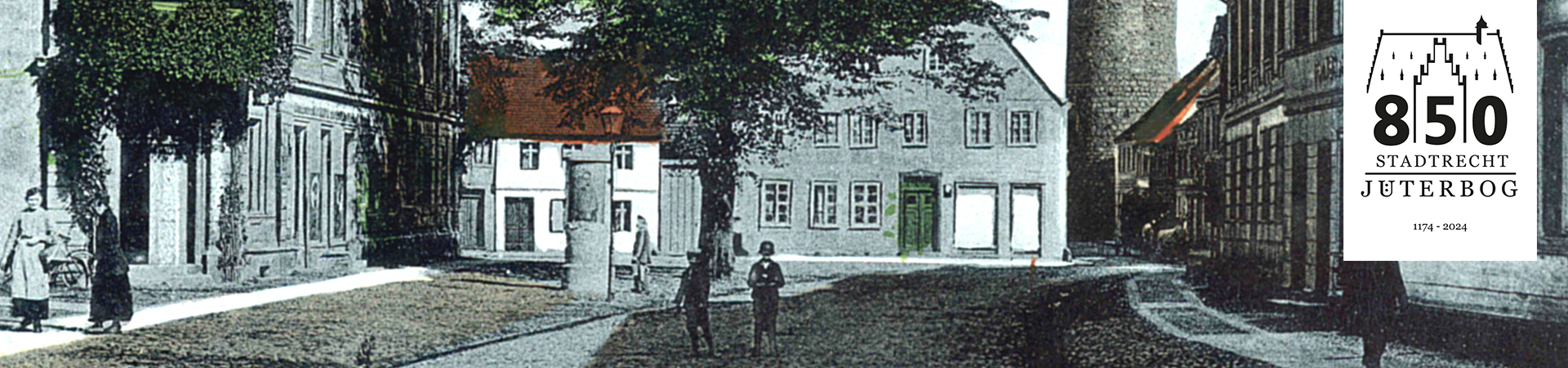
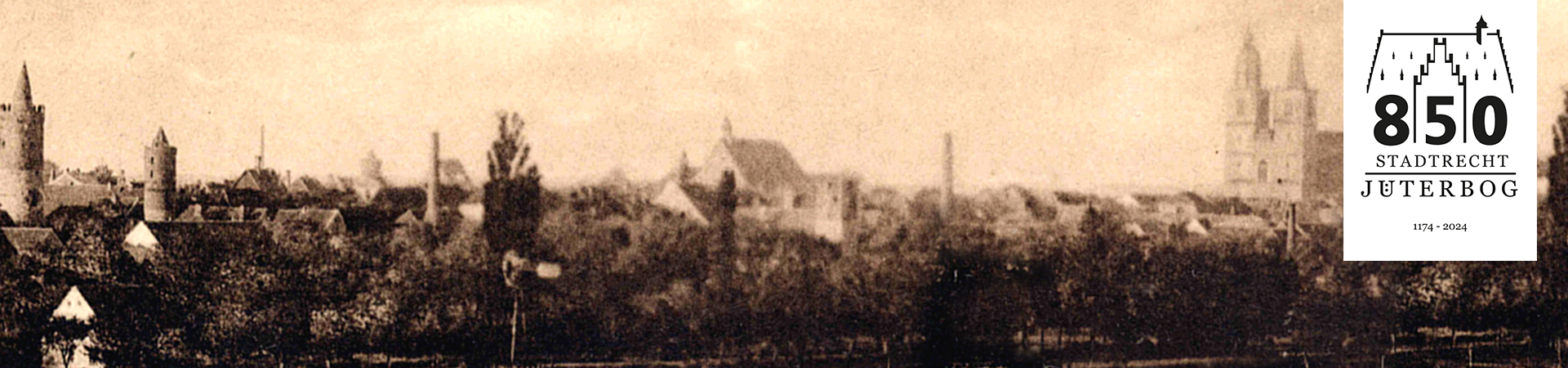
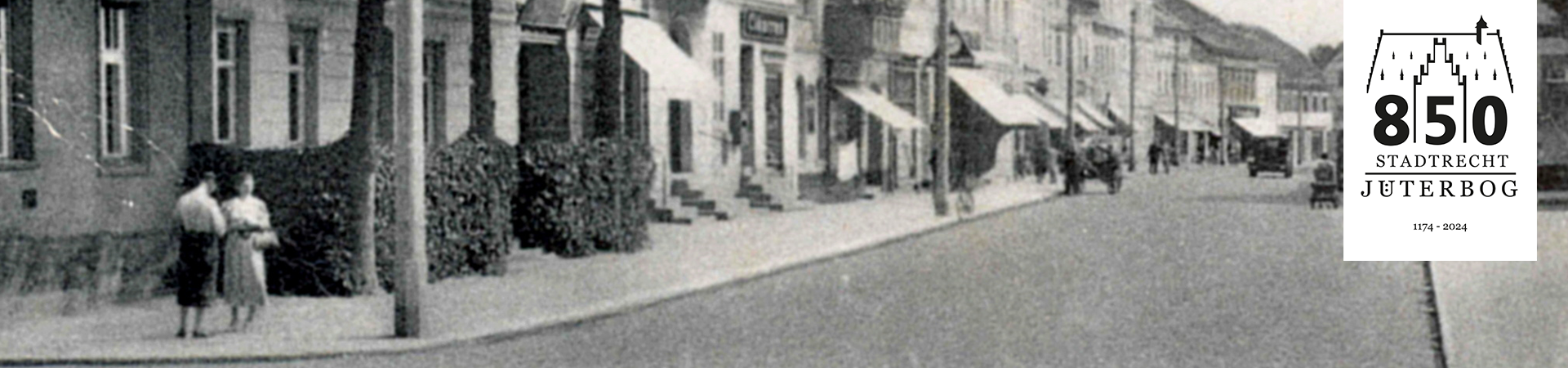
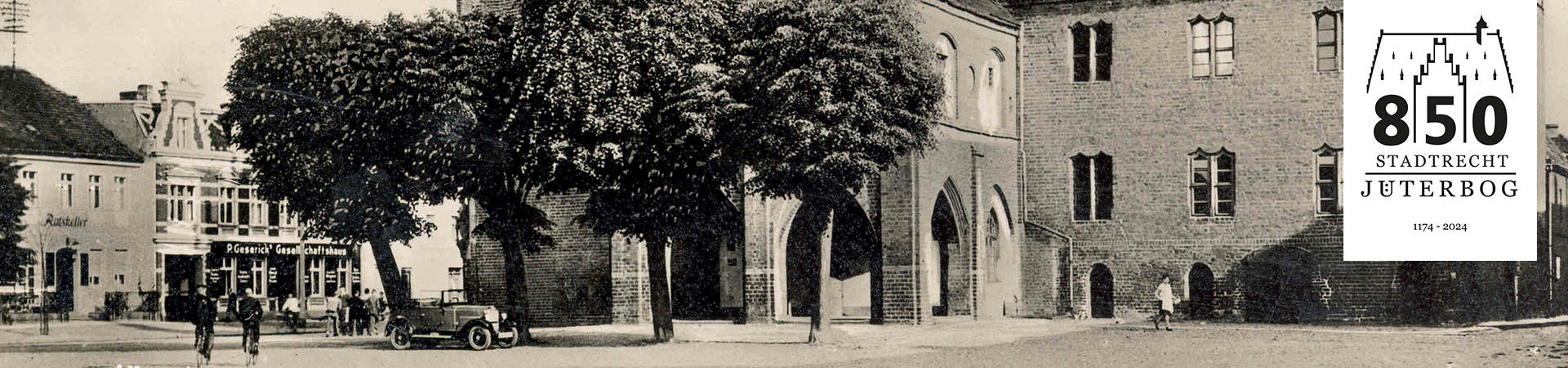
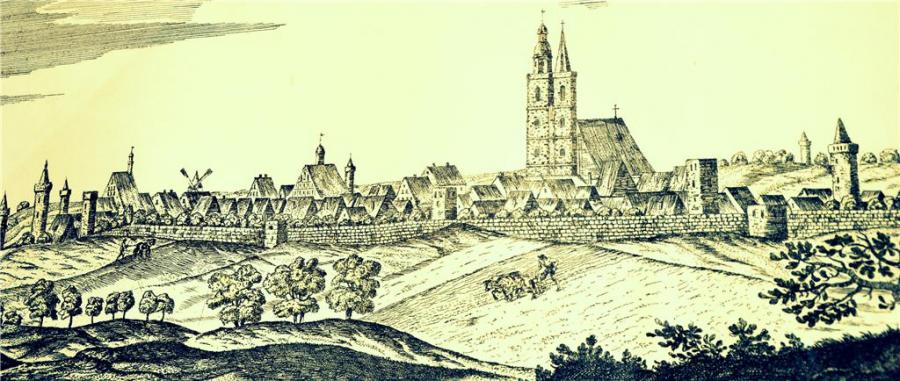
Up to today the town of Jüterbog is characterized by its buildings dating back to the Middle Ages. Coming to Jüterbog from any direction you will first see the impressive towers of St. Nikolai (Saint Nicholas Church) and the three town gates which will lead you to old town center. Jüterbog was first mentioned in writing in 1007. From the thirteenth century onward it was a flourishing trading point and important for voyagers from Magdeburg in the West to the Eastern provinces.
Through the centuries Jüterbog frequently was the setting of significant historical events:
Johann Tetzel was not allowed to travel to Wittenberg in Saxonia and conducted his trade of induldence letters in Jüterbog. This was one important catalyst causing Martin Luther to nail his 95 theses initiating Reformation of the Christian Church on the doors of the Schlosskirche in Wittenberg in October 1517.
The Commander Wallenstein was here during the 30-year-war.
The Prussian King Friedrich II startet the 7-year-war (1756–1763) from Jüterbog.
In Dennewitz near Jüterbog the „Battle of Dennewitz“ took place on 6th September 1813 where Napoleon was defeated and therefore did not reach Berlin.
At the time of Emperor Wilhelm Jüterbog was known as the largest Garrison Town in Germany.
In the period of German Romanticism Achim von Arnim lived in the neighboring Wiepersdorf with his wife Bettina. He wrote "Des Knaben Wunderhorn", (The Boy’s Magic Horn – Old German Songs) here.
Theodor Fontane immortalised Jüterbog in his famous "Wanderungen durch die Mark Brandenburg“ (Walks through the Mark Brandenburg).
During the period of the National Socialist „3rd Reich“ Jüterbog was the training location for all Trainee Lawyers of the years 1938 to 1944 in Germany. In the GDR (German Democratic Republic = East Germany) Jüterbog was one of the largest locations of Deployed Troups of the Soviet Union.
In Jüterbog you will discover traces of history from almost all eras.
A trip to Jüterbog is a journey through the history of Germany.
Please see following an extract of the chronicle of our town:
- 1007 Jüterbog was mentioned in writing for the first time
- 1157 Archbishop Wichmann of Magdeburg captured the area
- 1174 Bestowal of Town Rights, consecration of the Church of our Lady (Liebfrauenkirche)
- Around 1300 Construction of the Town Wall with three gates and towers
- 1300 - 1500 construction of St. Nicholas Church
- 1480 - 1510 the Franciscan Monastery and the Monk’s Church was built
- 1507 Construction of the Town Hall was completed
- 1517 Johann Tetzel in Jüterbog (indulgence trade)
- 1519 Thomas Müntzer als Lutheran Preacher in Jüterbog
- 1626 Wallenstein in Jüterbog in the 30-year-war
- 1635 Jüterbog becomes part of the Electorate of Saxony
- 1756 Friedrich II., King of Prussia, started the 7-year-war from Jüterbog
- 1813 Battle of Dennewitz
- 1815 Jüterbog becomes part of Prussia
- 1841 Opening of the train station on the railway line Berlin - Köthen (Anhalt Railroad)
- 1864 Opening of the first German Firing Range
- 1890 Construction of the Quarter Jüterbog II for Field- and Foot Artillery-Shooting School
- 1896 Opening of the horsetrack tram
- 1900 Opening of the local railway Jüterbog - Dahme
- 1914 - 18 During World War One enormous expansion of the military sector,
- From 1919 onward 1st conversion
- 1930 Opening local museum in Marienkloster (until 1945)
- 1934 - 39 Immense increase of rearmament, expansion of all military sectors, in particular artillery and air force, construction of several residential areas close to town for military personnel
- 1936 Incorporation of the Western suburb Damm
- March 1945 Consolidation RAD-Infantry-Division "Friedrich Ludwig Jahn"
- 20th of April 1945 End of the war in Jüterbog
- 1945 - 48 2nd conversion – establishment of Soviet garrisons
- 1948 - 94 Soviet-Russian garrison town, in particular artillery, tanks, air force
- 1952 - 93 County Seat of a mainly agricultural district, incorporation of the Eastern suburb Neumarkt
- 1957 Jüterbog celebrates 950 years first documentary mention, 800 years part of the „German Empire“, 650 years church St. Nicholas
- 1974 800-years Town Charter
- 04.11.1989 Mass demonstration on the sports ground
- 1990 - 94 Soviet-Russian garrisons are closed. In July 1994 the last Russian soldier leaves town, Jüterbog is now free of military forces for the first time since the year 1748
- 3rd conversion (up to today)
- 1999 Jüterbog presents the festival of the Federal State of Brandenburg - „Brandenburg Day“
- 2007 Jüterbog celebrates 1000 years